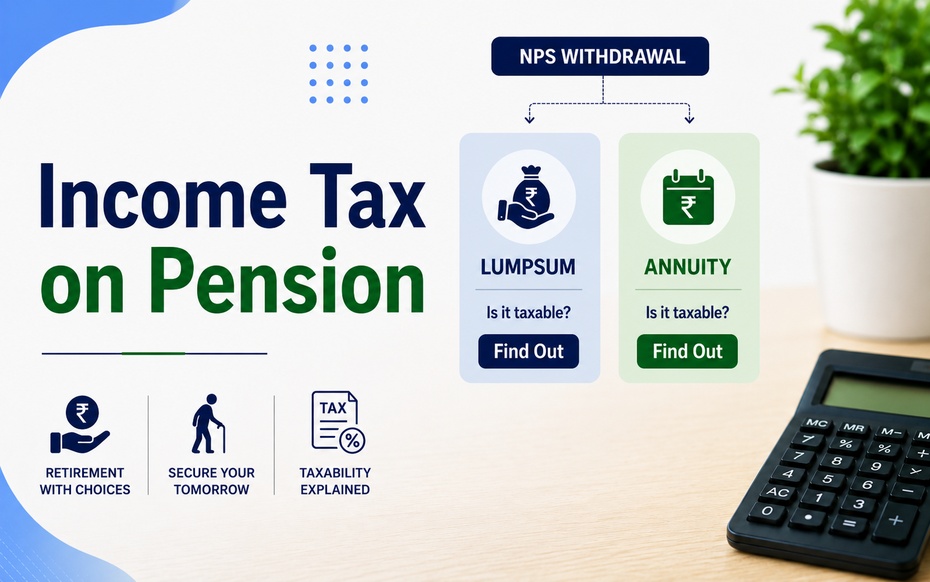


Is pension taxable in India? It depends on the type of pension and mode of receipt as well as employment terms, and applicable provisions depending upon age and tax brackets.
Regular pension is generally taxable whereas certain commuted pension is also exempt from taxes.
Is Pension Income Taxable in India?
Yes, pension income is taxable in India, except for certain exemptions. The taxation of pension generally depends on the type of pension received. The most common pensions are regular/ordinary pensions and family pensions. Regular pension received periodically by the former employee is taxed under the head “Salaries,” whereas family pension received by a nominee upon the death of an employee is taxed under “Income from Other Sources.” Understanding the difference between the two types of pensions is an essential first step to calculate the tax on pension.
Types of Pensions and Their Tax Treatment
When it comes to calculating income tax, pensions can be classified broadly into two categories, namely:
-
Commuted pension
-
Uncommuted pension.
Whether your pension is received as a lump-sum on retirement or periodically, it is essential to understand the applicable tax rules for commuted and uncommuted pensions before estimating the tax on pension.
What is Commuted Pension?
Commuted pension refers to the lump sum amount received for surrendering a portion of the monthly pension. The taxability of commuted pension depends to a large extent on whether the employee was in government service or not. Besides, in case of non-government employees, the computation of tax exemption also depends on whether the employee has received gratuity or not.
What is Uncommuted Pension?
Uncommuted pension refers to the periodic pension received as salary in installments. Is monthly pension taxable? Yes, uncommuted pension is fully taxable under the head “Salaries” at applicable tax rates just like regular salary.
How are Commuted and Uncommuted Pensions Taxed?
Is uncommuted pension taxable? Yes, uncommuted pension received as monthly installments is fully taxable under the head “Salaries” at applicable tax rates, just like regular salary.
Is commuted pension taxable? For government employees, commuted pension received is fully exempt from taxes under section 10(10A). In the case of non-government employees, one-third of commuted pension is exempt from taxes if the employee has received gratuity at the time of retirement. On the contrary, if no gratuity has been paid, then one-half of the commuted pension is exempt from taxes.
Pension Tax Rules for Government and Non-Government Employees
Is government pension taxable? Regular uncommuted pension for government employees is fully taxable, similar to salary income. However, commuted pension for government employees is fully exempt from taxes, as per the pension tax rules.
Is private employee pension taxable? In the case of non-government employees, regular uncommuted pension is fully taxable, whereas commuted pension is partially exempt from taxes. In the case of non-government employees, if a person has received gratuity, then one-third of the commuted pension is exempt from taxes. If no gratuity has been paid, then one-half of the commuted pension is exempt from taxes.
Is Family Pension Taxable?
Is family pension taxable? Yes, family pension received by the nominee from the employer on the death of an employee is generally taxable. Unlike regular pension which is taxed under the head “Salaries,” family pension is taxed under the head “Income from Other Sources.” In addition, a deduction of one-third of the family pension or Rs. 15,000, whichever is lower, is allowed for calculation of tax on family pension. However, under the recent Union Budget 2020 proposals, the deduction has been increased to Rs. 25,000 from FY2024.
Is Pension from NPS or Annuity Taxable?
Is NPS pension taxable? Yes, pension received from any annuity purchased from the National Pension System (NPS) is taxed in a similar manner as periodical pension. As with any other pension, the pensioner would need to file his or her income tax returns every year and pay taxes on the pension received.
Deductions and Tax Relief Available on Pension Income
Standard Deduction on Pension
Can pensioners claim standard deduction? Yes, standard deduction is allowed on the pension income that is taxable under the head “Salaries.” Standard deduction for pensioners is Rs. 50,000 (earlier tax rules) or Rs. 75,000 (new tax rules) for FY2025.
Relief on Pension Arrears
Is tax relief available on pension arrears? Yes, the tax relief under section 89 of the Income Tax Act can be claimed by pensioners in certain cases involving pension arrears or lump-sum receipt of pension.
How to Calculate Income Tax on Pension
How to calculate income tax on pension? Here are the steps to calculate income tax on pension:
-
Determine whether the pension received is commuted, uncommuted, or family pension.
-
Estimate the taxable pension portion based on the nature of the pension, as discussed earlier.
-
Claim deductions on the estimated taxable pension amount. In addition, deductions on other sources of income, if any, can also be claimed.
-
Add up other income (if any), to the estimated taxable pension amount to get the total income.
-
Calculate income tax on pension based on your applicable tax regime and slab rates.
Frequently Asked Questions About Income Tax on Pension
1. Is monthly pension fully taxable?
Yes, monthly pension or uncommuted pension is generally fully taxable under the head “Salaries” at applicable slab rates, like regular salary.
2. Is commuted pension taxable in India?
It depends. Commuted pension is fully exempt for government employees. In the case of non-government employees, one-third of commuted pension is exempt if the employee has received gratuity, or one-half of commuted pension is exempt if gratuity has not been given at the time of retirement.
3. Is pension received by government employees taxable?
Uncommuted pension is taxed as salary income even in the case of government employees. Commuted pension for government employees, on the other hand, is fully exempt from taxes, as per the pension tax rules.
4. Is family pension taxable?
Family pension is generally taxable under the head “Income from Other Sources.” However, a deduction of one-third of the family pension or Rs. 15,000, whichever is lower is allowed. With the recent Union Budget changes for FY2024, the exemption for family pension has increased to Rs. 25,000.
5. Under which income head is pension taxed?
Regular pension paid to a former employee is taxed under the head “Salaries.” Regular pension paid to a nominee on the death of an employee is taxed under the head “Income from Other Sources.”
6. Can pensioners claim a standard deduction?
Yes, pensioners can claim a standard deduction on pension income taxable under the head “Salaries.” The standard deduction for FY2025 is Rs. 50,000.
7. Is NPS pension taxable after retirement?
Yes, periodic pension received from an annuity, purchased from the National Pension System (NPS), is taxable in the year of receipt. However, it is important to note that the lump-sum withdrawal option under NPS is generally fully exempt under section 10(26)(viia).
8. Is pension received as a lump sum taxable?
A lumpsum (commuted) pension may be fully or partially exempt depending on whether the employee was in government or private service and whether gratuity has been received or not.
Disclaimer
Past performance may or may not be sustained in future and should not be used as a basis for comparison with other investments. Returns under NPS are subject to market risk and are prone to fluctuation depending on the state of the Financial market.
Investors are advised to consult their own legal, tax and financial advisors to determine possible tax, legal and other financial implication or consequence of subscribing to the schemes of DSP Pension Fund Managers Private Limited. Tax laws are subject to change.